I thought feeling wrecked by 3pm was just what happens after 40. It wasn't.
Same training. Same diet. So why was recovery taking twice as long as it did five years ago? Here's what actually changed it for me.

I didn't change my training. If anything I got smarter about it this year, better form, better sleep, more discipline than I had at 28. And yet the recovery kept stretching out. The energy dip started arriving before lunch instead of mid-afternoon. Sleep felt lighter. Tuesday's session was still sore on Thursday. There was one specific morning, week three of a routine change I'll get to, where I actually noticed the difference before I could explain it. But I'm getting ahead of myself.
I did what most people my age do: I added something to help. A greens powder, a magnesium tablet before bed, a general supplement I grabbed on the way home from the pharmacy. For a while it felt like doing something was better than doing nothing.
Then I actually looked at what was in the stuff I was taking.
"Most supplements are dosed to avoid deficiency, not to support performance. Nobody tells you that when you're buying one." · what a pharmacist friend told me, which is what sent me down this rabbit hole
What I actually found
UK and EU supplement rules set a floor for vitamin and mineral content, enough to stop outright deficiency in a general population. That's it. It was never built as a performance benchmark for someone lifting three times a week at 44. Most of what's on the shelf is dosed to just clear that floor, because it's cheaper, and because almost nobody checks the actual numbers on the back of the tub.
The second thing I hadn't thought about: timing. Your body's hormonal rhythm, cortisol, testosterone, melatonin, runs on roughly a 24-hour cycle. Cortisol peaks in the first hour after waking and drives alertness and energy. Melatonin and growth hormone activity rise in the evening and drive repair. Taking one supplement "whenever I remembered", usually with breakfast, sometimes not at all, was ignoring that rhythm completely.
"It's not that I was getting older. It's that I was taking the right things at the wrong time, for years." · the moment this stopped being abstract for me
I started calling it my "timing problem" in my head, mostly so I'd stop blaming my age for something that might just be a scheduling issue. Once you see it, it's hard to unsee, every supplement routine I'd ever had was built around remembering, not around rhythm.
The background numbers that got my attention
I went and read the actual research behind a few of these ingredients, rather than taking anyone's word for it. Worth sharing what's genuinely established versus what's still being worked out:
Background research context, not a claim about what Elude itself does. See the note at the end of this article for sourcing and important caveats, including a 2025 Copenhagen study that challenges whether NAD+ decline itself drives aging at all.
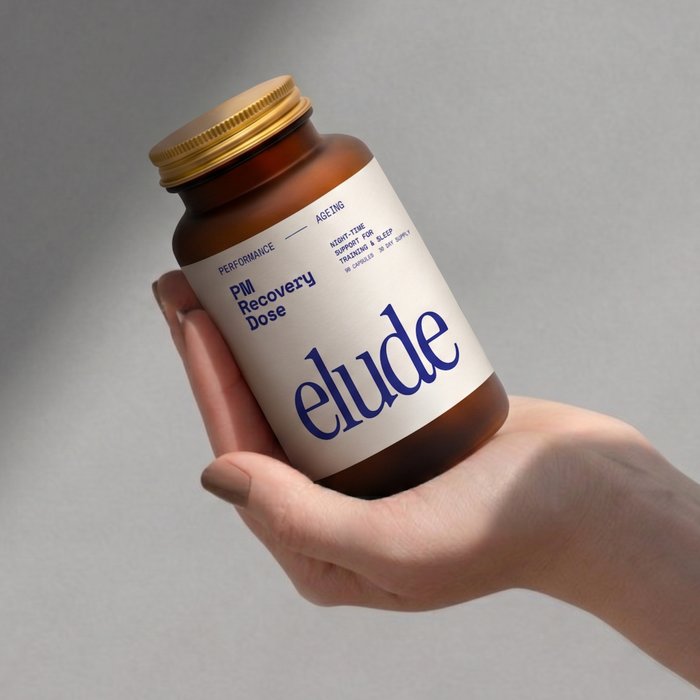
On the sleep side specifically: a 2025 randomized, placebo-controlled trial on magnesium bisglycinate combined with glycine, the same combination in the PM Recovery Dose, found a modest but statistically significant improvement in insomnia severity scores over 28 days. It's one trial, not a mountain of evidence, and the effect size was small. But it's a real result on the actual ingredients involved, which is more than most supplement marketing can say.
The circadian case, and what's actually proven
I want to be honest about where the evidence actually stands, because most of what you'll read on this online overstates it. Chrononutrition, timing what you eat and supplement around your body clock, is a genuinely active area of research, not settled science with a neat headline number attached. What's well established: the cortisol and melatonin rhythms themselves, and the broad logic that nutrients used for energy metabolism versus tissue repair make more sense delivered at different points in the day. What's still being researched: exactly how much difference the timing itself makes versus the nutrients alone. I'm one person, three months in, not a clinical trial. Worth knowing before you read the rest of this as more certain than it is.
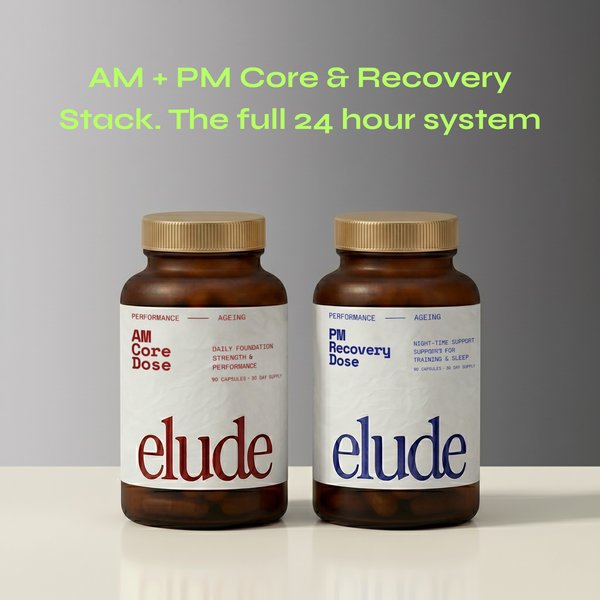
A small but growing number of formulators have started building around this rhythm directly, one dose engineered for the body's natural morning energy phase, a separate dose engineered for the evening repair phase, instead of a single blend asked to do both jobs at once.
Three things you can try tonight, before you buy anything
Genuinely, try these first. They're free, and they're the foundation the rest of this is built on:
-
01
Get outside within 30 minutes of wakingMorning light exposure is one of the strongest, best-evidenced levers for keeping your cortisol rhythm on schedule, free, and takes two minutes.
-
02
Move your magnesium to the evening, not the morningIf you're already taking one, this alone is a free timing fix most people never make, no new spend required.
-
03
Keep your wake time consistent, even on weekendsThe single biggest thing wrecking a 40+ recovery clock isn't supplements, it's a two-hour weekend lie-in shifting your whole rhythm.
None of that costs anything. What follows is what I added on top, once those were already in place.
What I started looking for instead
-
01
The actual milligram doses printed on the labelNot just an ingredient list, the amounts, so I could see what I was really taking.
-
02
A pharmacist involved in the formulation, not just a marketing teamThat changes what actually ends up in the capsule.
-
03
Timing built in, not left to guessworkSomething for the morning, something separate for the evening, each doing one job.
-
04
One thing to buy, not a cabinet full of separate tubsI did the maths on what I was actually spending across five different bottles, more on that below.
That last one mattered more than I expected. Before this, my bathroom cabinet had a vitamin D tub, a magnesium tub, a separate zinc, a CoQ10 I kept forgetting to reorder, and a K2 I wasn't sure I even needed alongside the D3. Buying those separately, at normal UK retail prices, especially once you get into quality forms of magnesium, CoQ10 and the rest, rather than the cheapest tub on the shelf, can easily run close to £150 a month once you've actually got everything stocked. And that's before you've solved the timing problem at all, because none of them tell you when to take what. An AM/PM system that already has this worked out isn't just simpler, it's meaningfully cheaper than doing it properly piece by piece.
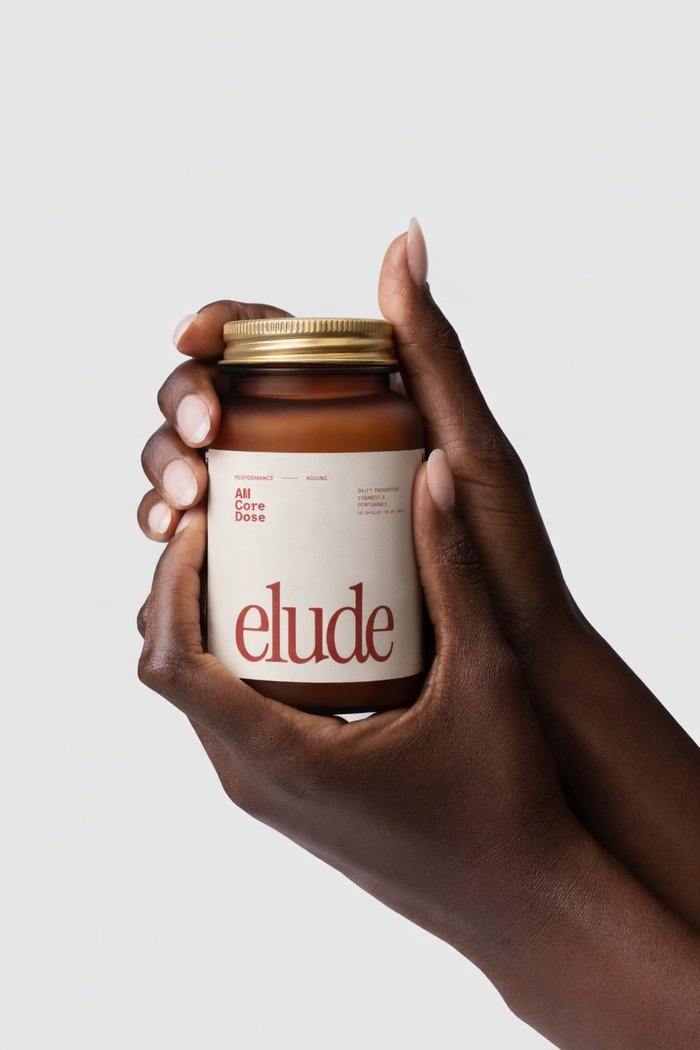
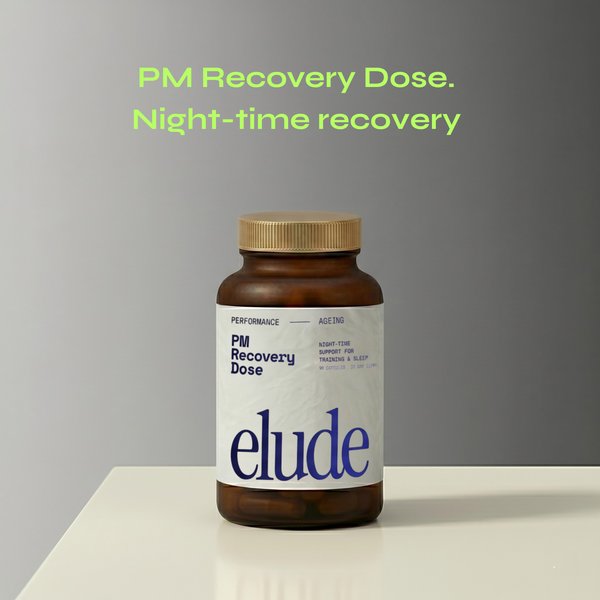
That search is how I landed on Elude Health, an AM/PM system built by an ex fitness pro and reviewed by our in-house pharmacist. Small brand, not one you'll have seen everywhere yet. I nearly closed the tab twice before actually ordering, mostly out of the usual "is this just another subscription I'll forget to cancel" skepticism. I'm three months in now, so here's the bit you actually clicked for.
The morning dose isn't just "energy", it's the foundation for actually keeping muscle
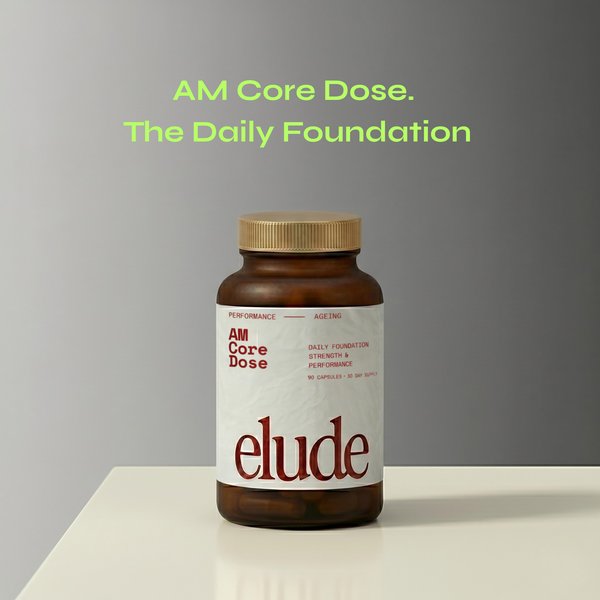
This is the part that actually got my attention as someone who still trains hard. Past 40, keeping muscle isn't automatic. It's a fight against a background trend, and that fight is won or lost on foundational stuff most people skip: enough zinc for normal testosterone regulation, enough magnesium for normal muscle function, enough D3 because low levels are so common they're basically the norm by this age. The AM Core Dose is built around exactly that foundation, not a pre-workout buzz, but the baseline nutrient status that actually lets you keep training hard, keep progressing, and keep the muscle you're working for, instead of slowly losing ground to age while you're doing everything else right.
Why the evening dose matters more than the morning one
If I'm honest, I almost skipped the PM side entirely when I first looked at this. The morning formula felt like the obvious "main" product, and recovery felt like a bonus. That was backwards. Sleep is the biggest lever in almost everything I was struggling with: energy, soreness, mood, even how hungry I was the next day. This is where it stopped being generic "recovery" ingredients and started making sense to me: glycine and L-theanine for winding down without feeling groggy, magnesium for muscle relaxation, phosphatidylserine for the body's stress response overnight. The AM dose builds the foundation. The PM Recovery Dose is what actually lets you use it, built around the window where your body does its repair work, not just "something to take before bed."
What the first month actually looked like
-
Day 1–5
No noticeable difference, and I didn't expect oneAnyone promising overnight results in a supplement is telling you what you want to hear, not what's true.
-
Day 12
The 3pm wall moved to closer to 5pmSmall, and I nearly wrote it off as a good week rather than anything real.
-
Day 21
The morning I mentioned earlierWoke up before my alarm, actually rested, after a heavier leg session two days prior that would normally still have me stiff. That's the moment I started paying proper attention.
-
Day 30+
Consistency, not a single dramatic changeRecovery time back to something closer to what I remember from my late 30s. Sleep more consistently deep rather than just longer. My own Oura data over that stretch went from averaging in the low-70s for sleep score to consistently high-70s, and my morning HRV readings trended up too, though I'll say plainly this is one person's own wearable data, not a clinical measurement, and plenty else in my life changed over that month too.
I want to be straightforward about what this is and isn't. It didn't turn me into a 25-year-old. What it did was close a gap that had been quietly widening for a few years, in a way I could actually feel by week three and confirm by week six.
Who's actually behind it
Worth saying, because it's the part that made me trust it enough to try: Elude was built by an ex fitness pro, not a marketing team that later hired a trainer to front the brand. Every formula goes through their in-house pharmacist before it ships, not as a badge on the packaging, an actual step in how the product gets made. That combination is rarer than it should be in a category full of people repeating supplement-industry buzzwords they don't fully understand themselves.
Worth knowing as you read the rest: Elude are behind this Founding Member offer, and I'm sharing my own experience with it alongside it. Everything above is genuinely why I started looking. Everything below is what I found.